
When the Candy Bucket Overflows

It started out innocent enough—Sarah told her two kids they could each have “a few pieces” of candy after trick-or-treating. But a few turned into a handful, and by morning, she found empty wrappers stuffed between couch cushions and a sugar crash that rivaled the post-holiday blues.
“Mom, my tooth hurts when I bite down,” her son said two days later. Sarah froze. She’d brushed and flossed the night before. How could one night of fun cause this?
Like many parents, Sarah wasn’t being careless. She was trying to balance joy with responsibility—letting her kids indulge while keeping dental health in mind. But candy season has a sneaky way of testing even the best routines.
If you’ve ever wondered how to balance Halloween fun with a healthy smile, you’re not alone. Every fall, families across Lathrup Village and Southfield face the same dilemma: How much candy is too much—and what kinds are the real troublemakers?
The Real Culprit Behind Halloween Cavities
Here’s the truth: it’s not just the amount of candy—it’s how long sugar stays in your mouth.
When kids eat sweets, bacteria in the mouth feed on the sugar and release acid. That acid wears away at tooth enamel, leading to weak spots and eventually cavities. The longer sugar and acid stay on teeth, the more damage they can do.
That’s why certain candies cause more harm than others.
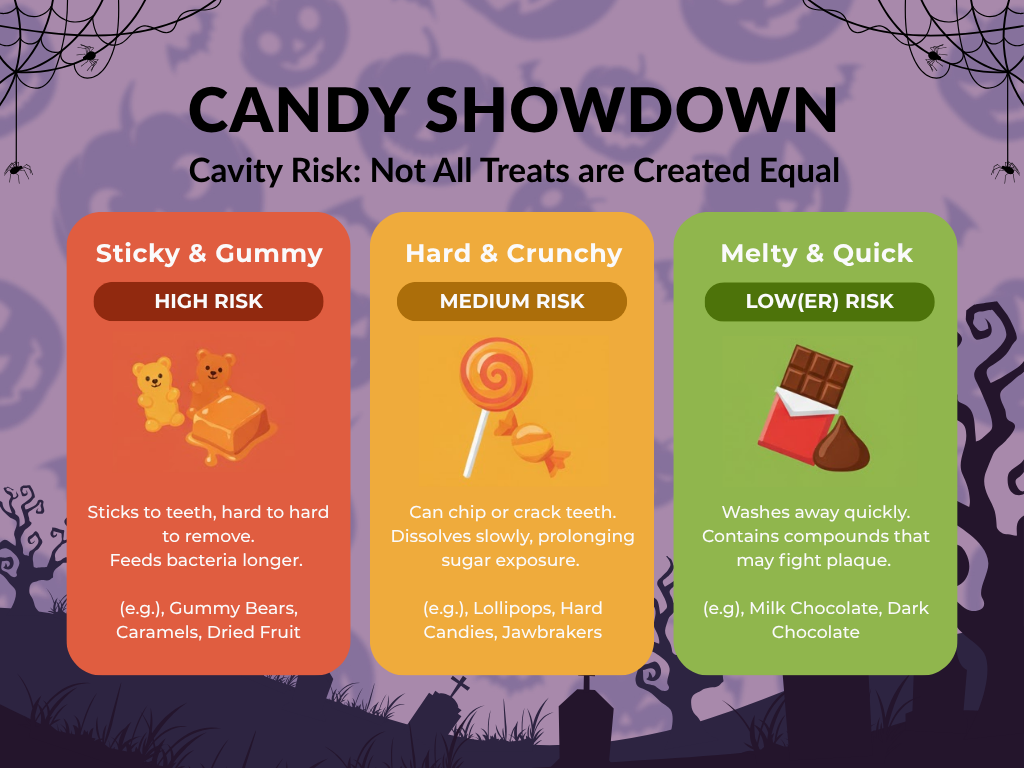
- Sticky caramels and gummies: These cling to molars, hiding between grooves and crevices. They can linger for hours, even after brushing.
- Sour candies: These pack a double punch—high sugar and acid. They start eroding enamel the second they hit the tongue.
- Hard candies: They dissolve slowly, meaning your teeth are bathed in sugar for minutes at a time.
- Chocolate (especially dark chocolate): Melts quickly, rinses easily, and often contains less sugar.
So if your kids are going to indulge—and let’s face it, they will—steer them toward treats that don’t stick around.
Key takeaway: You don’t need to ban candy; you just need to understand which types are hardest on enamel and how to balance them out.
The Sticky Science Behind Sugar
Here’s something many parents don’t realize: it’s not how much sugar you eat in a day—it’s how often.
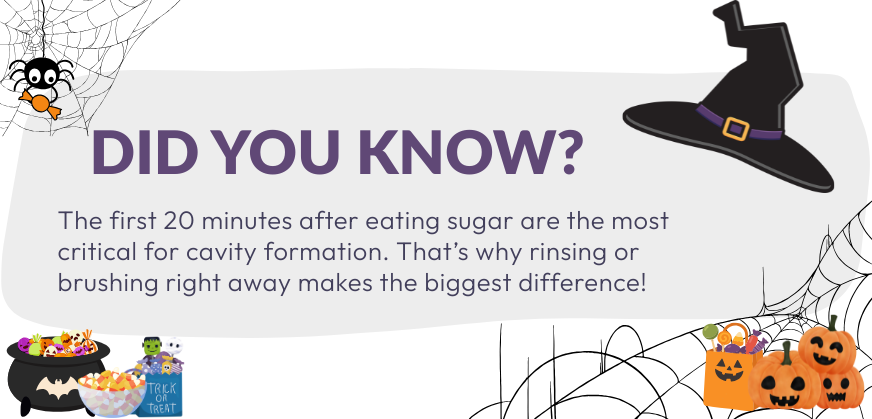
Every time sugar hits your teeth, acid levels spike for about 20 minutes. Have a lollipop that lasts ten minutes? That’s one acid attack. Nibble candy every half hour for the whole day? That’s dozens.
The math adds up fast—and so does the risk for cavities.
At Fortson Dentistry in Lathrup Village, we see this pattern every November. Kids come in after Halloween with early signs of decay—not from one big candy binge, but from small, frequent snacks that keep acid levels high all day.
Think of your mouth like a neighborhood. When sugar moves in, bacteria throw a party. The longer they hang out, the more damage they cause. The goal isn’t to kick them out forever—it’s to make their stay as short as possible.
How to Outsmart Sugar Season

After Halloween night, most parents stash the candy bucket somewhere “out of sight.” But the real trick is turning candy time into a small, controlled routine. Here’s what we suggest to families in Lathrup Village:
- Time it right. Have candy with meals, not as random snacks. Saliva production during meals helps neutralize acid and wash away sugar.
- Hydrate smartly. Keep water nearby after sweets. Rinsing helps remove residue and keeps the mouth balanced.
- Brush before bed. Make Halloween night the one time brushing is non-negotiable—especially after sticky or sour treats.
- Swap strategically. Encourage kids to trade sticky candies for chocolate or sugar-free gum. Sugar-free gum with xylitol actually helps protect enamel.
- Set a “treat timer.” Allow sweets for the first few days, then donate or store the rest. Many local dental offices even run candy buyback programs.
These small shifts make a big difference—both in cavity prevention and in teaching healthy moderation habits.
When to Worry About a Toothache
%202.jpg)
A toothache after Halloween doesn’t always mean a cavity, but it’s a sign your child’s teeth are under stress. Sometimes, trapped food debris irritates the gums or exposes a sensitive spot. Other times, it’s the early sign of decay forming under an old filling or in a deep groove.
At Fortson Dentistry, we often see kids with mild tooth sensitivity after the holiday rush. Most cases clear up within a few days, but if the discomfort lingers—or if your child avoids chewing on one side—it’s worth coming in for a quick exam.
Think of it like catching a small spark before it becomes a fire. A short, preventive visit now can save you from a more serious (and expensive) procedure later.