Now accepting new patients! Call (248) 557-8120 to book your visit.

Dental Bridges vs Implants for Missing Teeth

When comparing bridges vs implants, dental implants replace the entire tooth structure from root to crown without modifying adjacent enamel, while a fixed bridge anchors artificial teeth to prepared neighboring teeth. Implants help preserve natural jawbone density, whereas bridges provide a reliable, non-surgical restoration completed in fewer office visits.

Losing a tooth impacts how you chew, speak, and smile. In Lathrup Village, patients dealing with tooth loss often weigh these two primary paths to restore their bite. At Fortson Dentistry Lathrup, Dr. Cory Fortson evaluates each patient's oral anatomy to determine which treatment fits their specific lifestyle and health goals.

Selecting between these tooth replacement options involves understanding structural differences, treatment longevity, and procedural steps. Both treatments can successfully rebuild your smile, but their mechanical relationship with your jaw and adjacent teeth differs significantly.
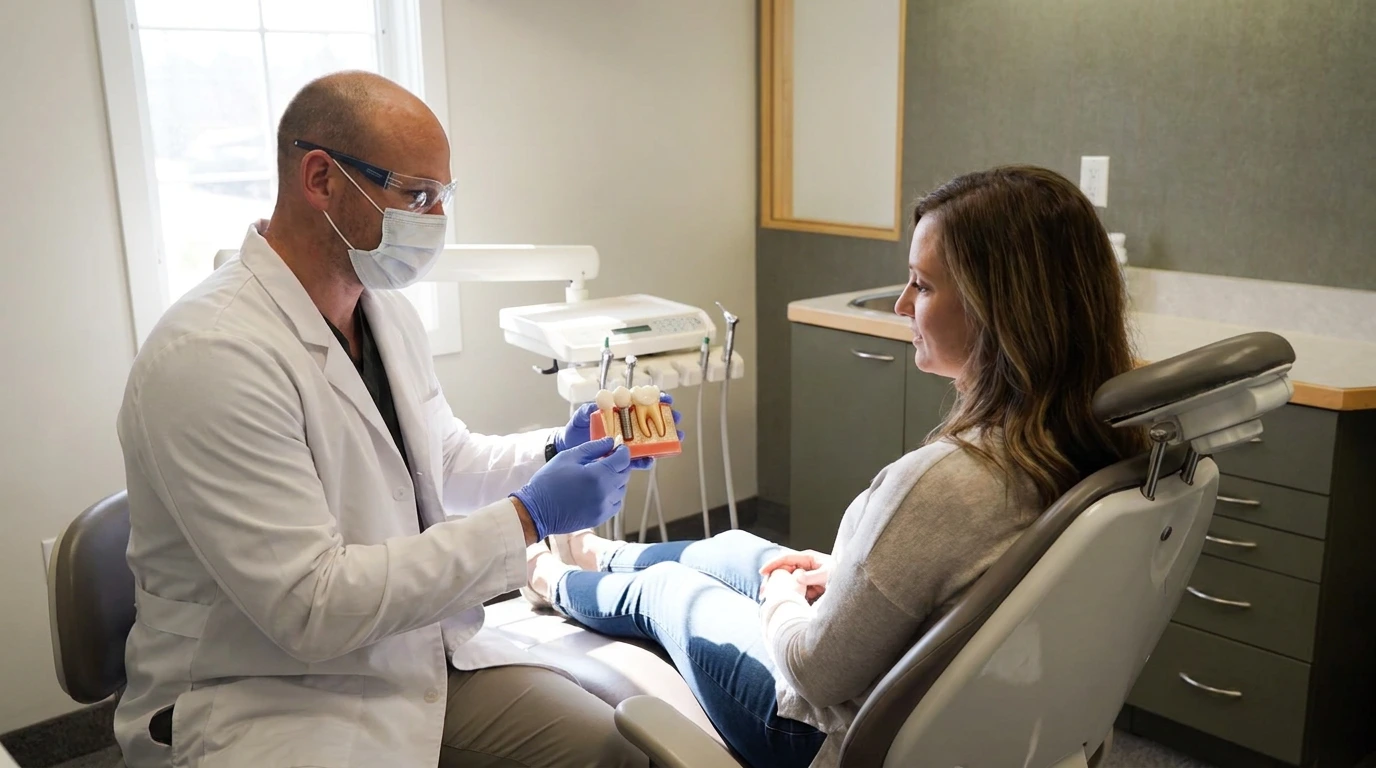
Dentist in a white lab coat holds a dental implant model while talking with a patient seated in a dental chair.

How Do Bridges and Implants Structurally Differ?

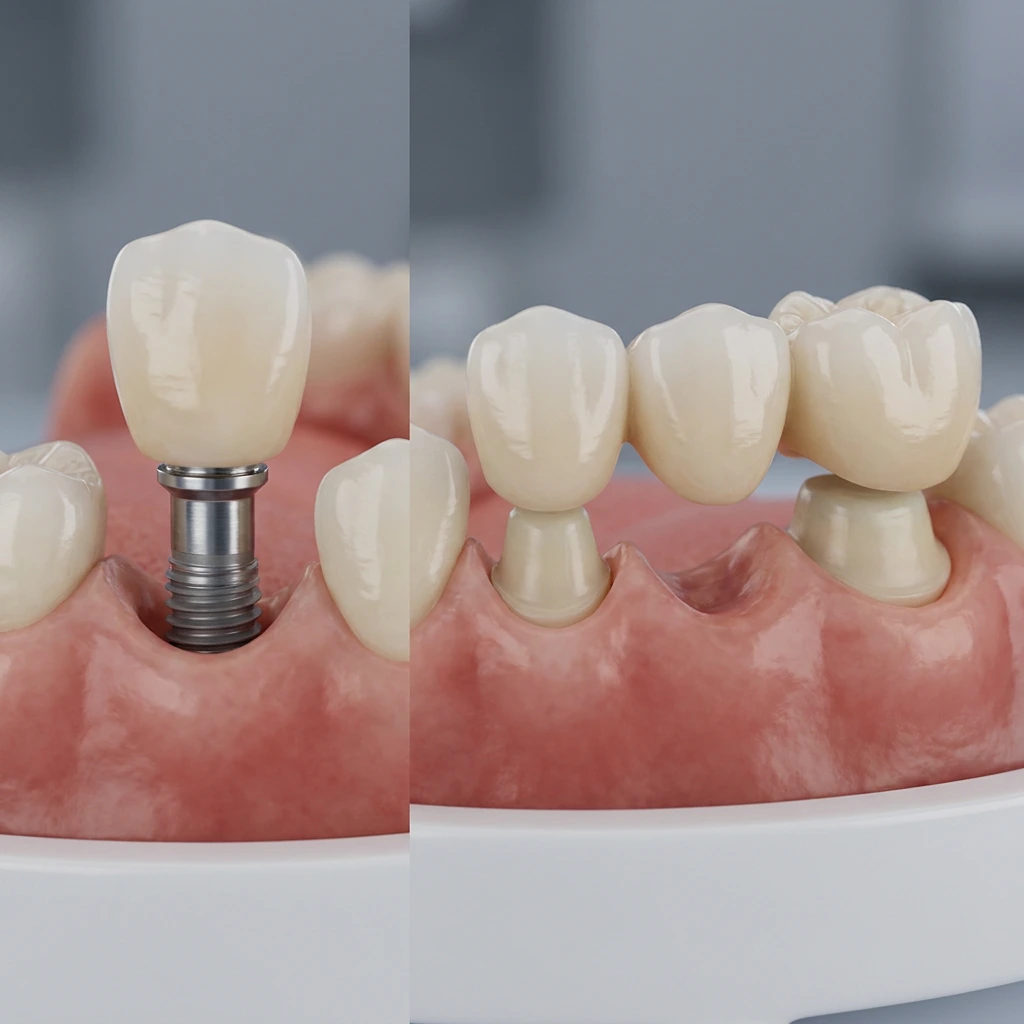
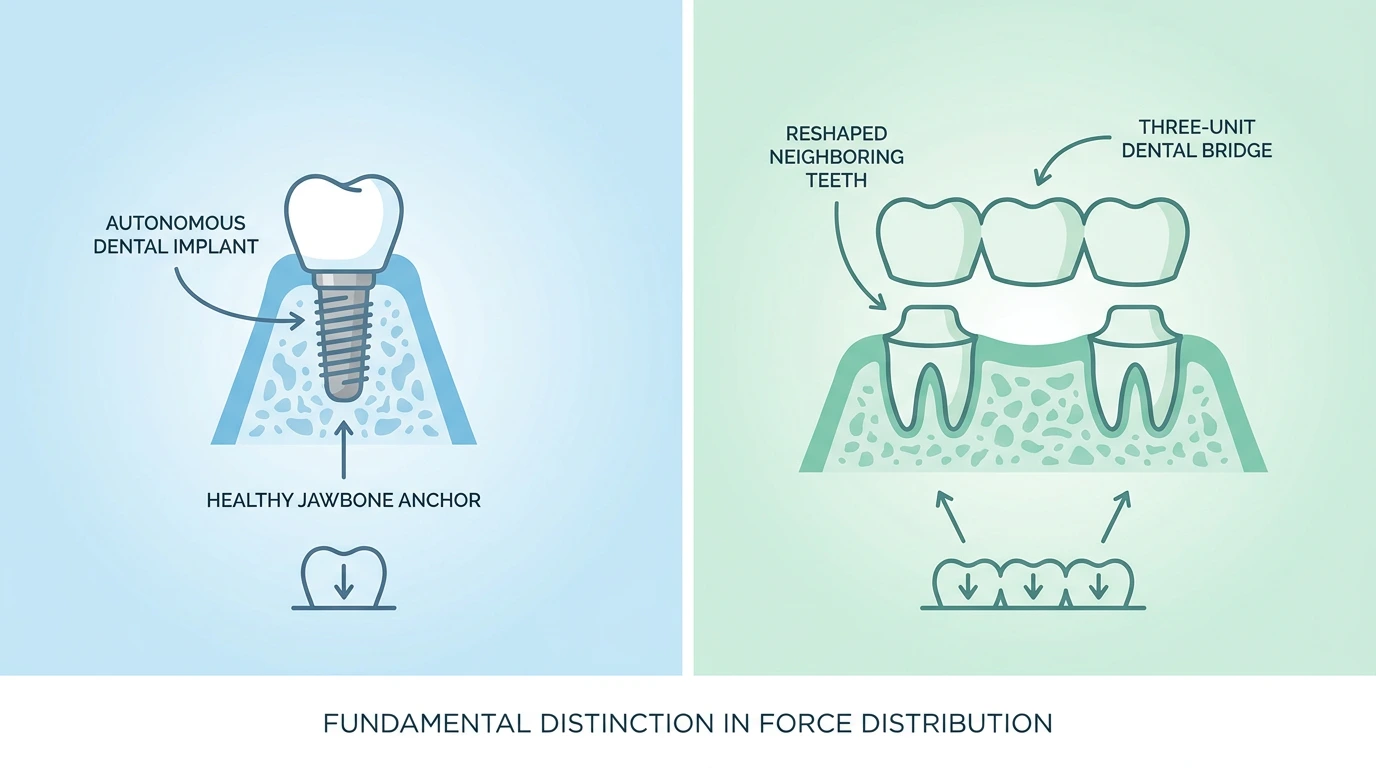
Dental bridges connect an artificial tooth to dental crowns placed over shaved natural teeth on either side of a gap. In contrast, dental implants feature a biocompatible titanium post inserted directly into the jawbone, topped by an abutment and custom crown that functions independently of neighboring teeth.

The fundamental distinction lies in how each restoration distributes biting force across your dental arch. A bridge uses supporting natural teeth as pillars to suspend a pontic over the empty gumline. Because those anchor teeth must be reshaped to receive crowns, some healthy tooth structure must be removed.

Structural Factors to Consider

  • Foundation stability: Implants integrate directly into bone tissue, simulating a natural tooth root.
  • Neighboring enamel: Traditional bridges require modifying healthy adjacent teeth to secure anchor crowns.
  • Independence: Individual implant crowns stand alone, allowing normal flossing between individual teeth.
  • Surgical placement: Implants require oral surgery for fixture placement, whereas bridges rely strictly on restorative dental work.

Dr. Cory Fortson carefully examines the integrity of adjacent teeth before recommending a structural direction, ensuring your remaining dentition stays as healthy as possible.

Split diagram comparing a dental implant anchored in the jawbone with a three-unit dental bridge anchored on neighboring teeth.

What Is the Procedure Timeline for Each Option?

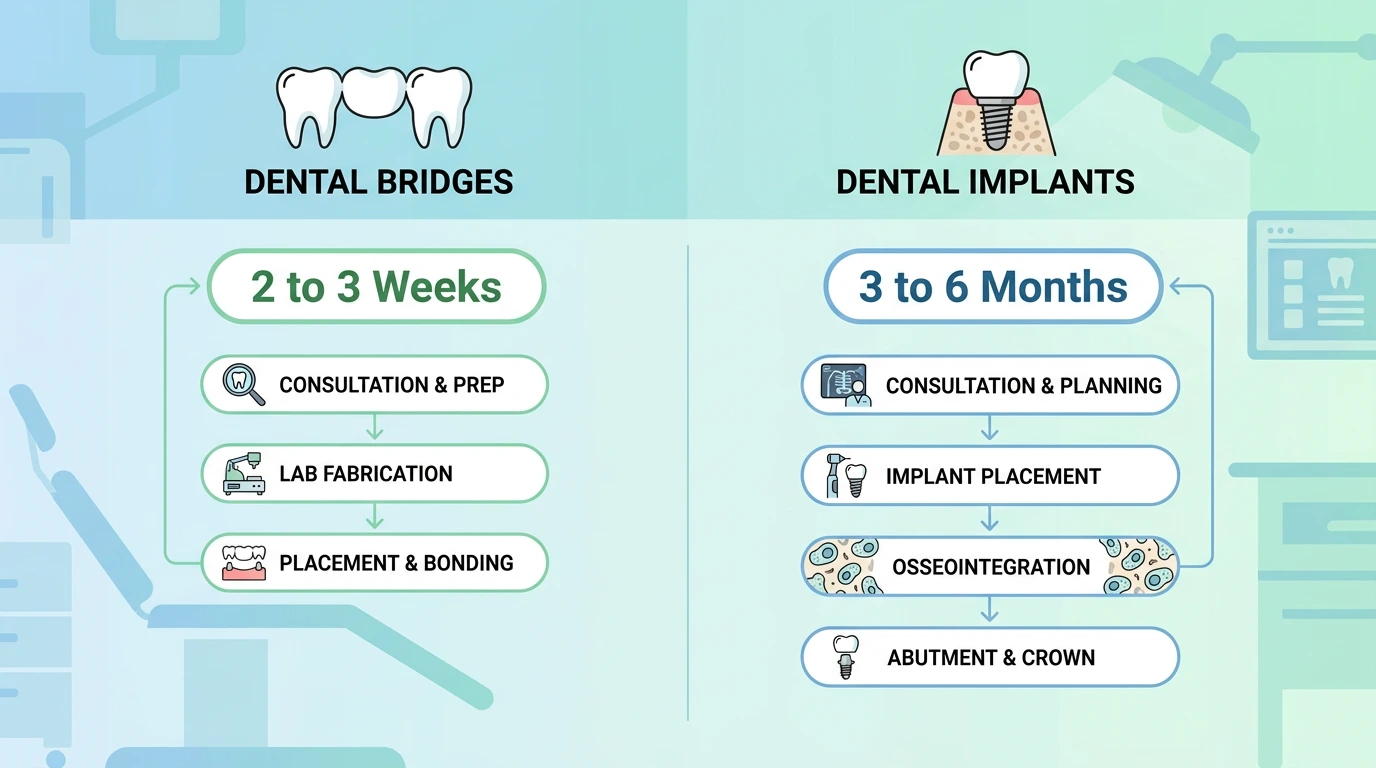
A dental bridge procedure typically requires two to three appointments spanning two to three weeks. A dental implant timeline spans several months, as the bone must fully fuse around the post through osseointegration before the final restorative abutment and crown can be securely attached.

If you desire a prompt restoration, a bridge offers a clear procedural advantage. During your initial visit, the anchor teeth are reshaped, detailed impressions are taken, and a temporary bridge is placed while a laboratory fabricates the final restoration.

Treatment Phases Compared

  • Bridge preparation: Involves enamel reshaping, impressions, and placement of a temporary restoration during the initial consultation visit.
  • Bridge delivery: Occurs approximately two to three weeks later when the final restoration is bonded in place.
  • Implant integration: Requires a healing period of three to six months while the post integrates with the surrounding bone.
  • Final implant restoration: Concludes with placing the custom abutment and final crown once the jawbone has completely stabilized.

While the implant timeline is longer, many patients appreciate that the final result functions autonomously without altering nearby teeth.

Timeline comparison showing dental bridges taking about 2 to 3 weeks and dental implants about 3 to 6 months, with the main steps of each.

How Bone Density Affects Your Candidacy

Dental implants require sufficient jawbone height and density to anchor the post securely, whereas dental bridges do not depend on bone volume. If you have experienced bone loss following an extraction, bridge placement remains straightforward, while an implant may require preparatory bone grafting.

When a tooth is lost, the underlying alveolar bone gradually resorbs because it no longer receives stimulation from chewing pressure. Patients who have had missing teeth for an extended period often experience significant jawbone resorption in that area.

During an initial exam, Dr. Cory Fortson assesses your bone levels using modern imaging. If bone volume is limited, he can discuss whether a preparatory bone graft or a conventional bridge makes the most sense for your situation. Bridges rest purely above the gum tissue, making them a good choice for individuals who prefer to avoid bone augmentation.

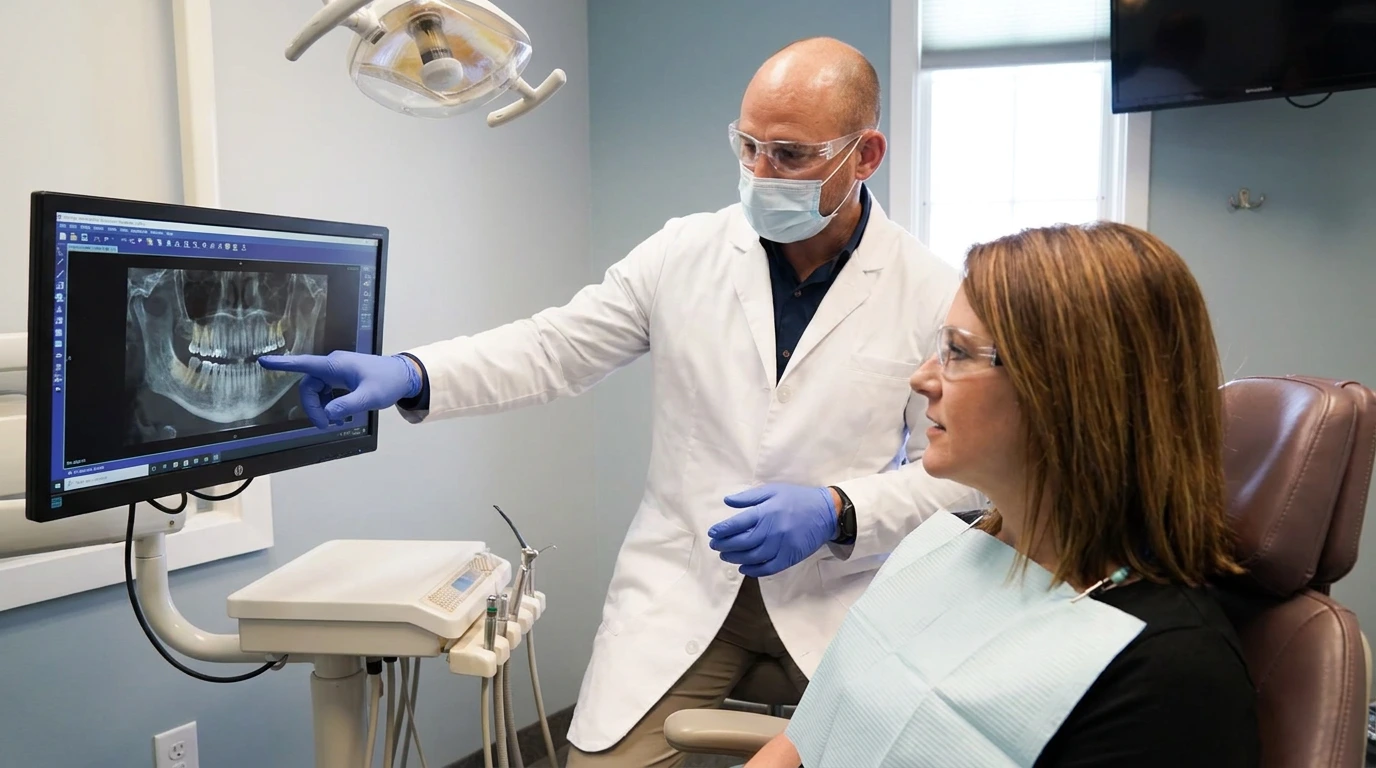
Dr. Fortson points to a digital x-ray on a display monitor while speaking with a patient seated in a dental chair.

Schedule a Tooth Replacement Consultation

Ready to restore your smile and chew with confidence again? Contact our team at Fortson Dentistry Lathrup to schedule an evaluation with Dr. Cory Fortson. We will examine your oral health, discuss your options, and build a personalized treatment plan designed for your smile.

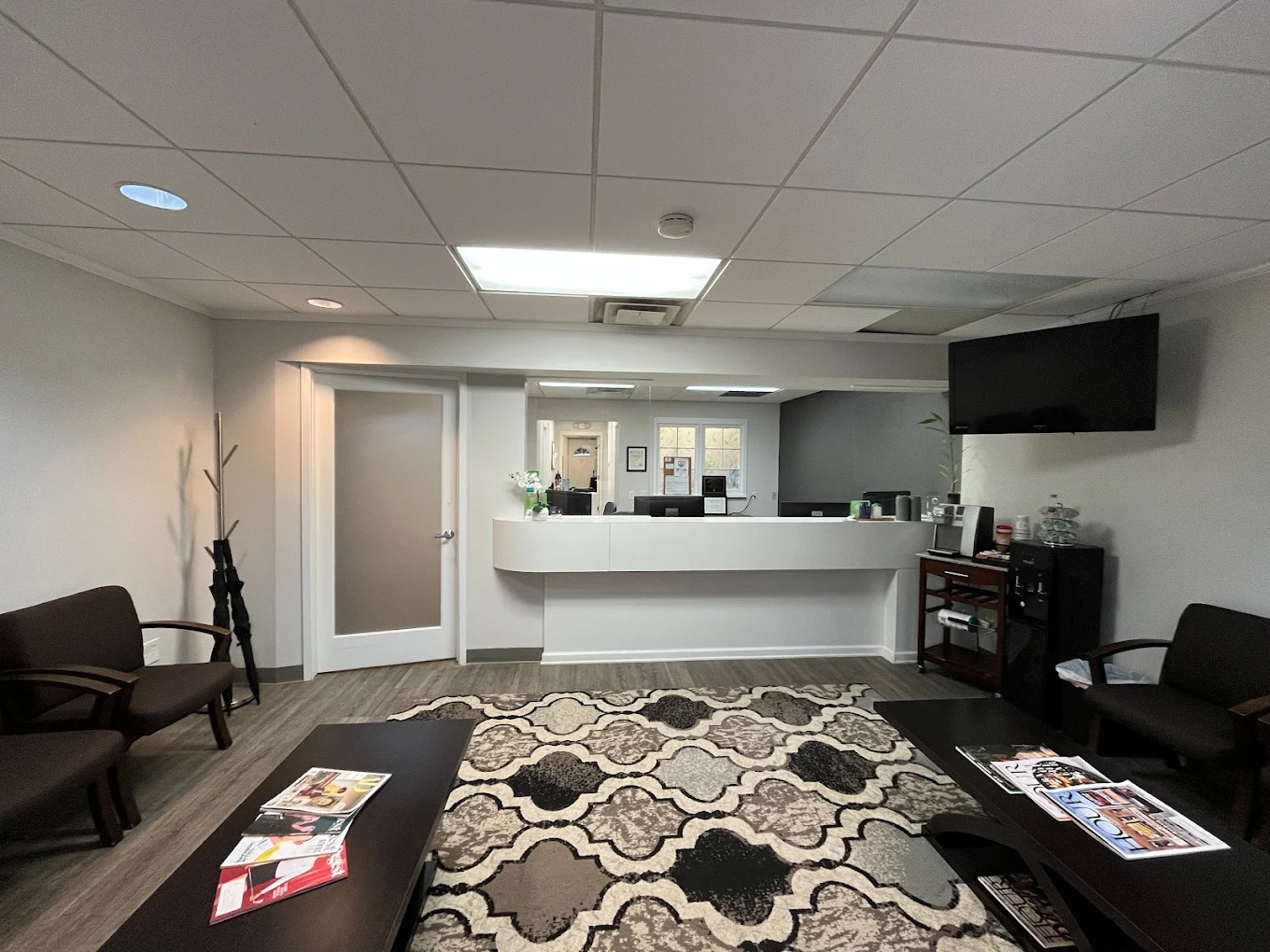
Welcoming dental office at Fortson Dentistry Lathrup

What Daily Maintenance Do Bridges and Implants Require?

Dental implants are maintained exactly like natural teeth with standard brushing and regular flossing around the crown. Bridges require specialized cleaning techniques, such as using floss threaders or interdental brushes, to remove food debris and plaque that accumulate beneath the suspended artificial tooth.

Consistent hygiene is critical for both restorations, though their specific vulnerabilities vary. While an artificial crown cannot develop a cavity, the natural teeth anchoring a bridge are still susceptible to decay along the crown margins.

Daily Cleaning Techniques

  • Floss threaders: Essential for maneuvering dental floss underneath a bridge pontic to prevent bacterial buildup.
  • Interdental brushes: Helpful for sweeping away plaque between tight spaces and along bridge margins.
  • Standard flossing: Works seamlessly around individual implant restorations just as it does between natural teeth.
  • Antimicrobial rinses: Assist in keeping surrounding gum tissue firm and free of inflammation around both restoration types.

Maintaining meticulous home hygiene protects your investment and preserves the gum tissues supporting your restorations.

A callout box displays the text Daily Care Protects Restorations beside an interdental brush, a floss threader, and a wooden toothbrush.

Understanding Costs and Treatment Value

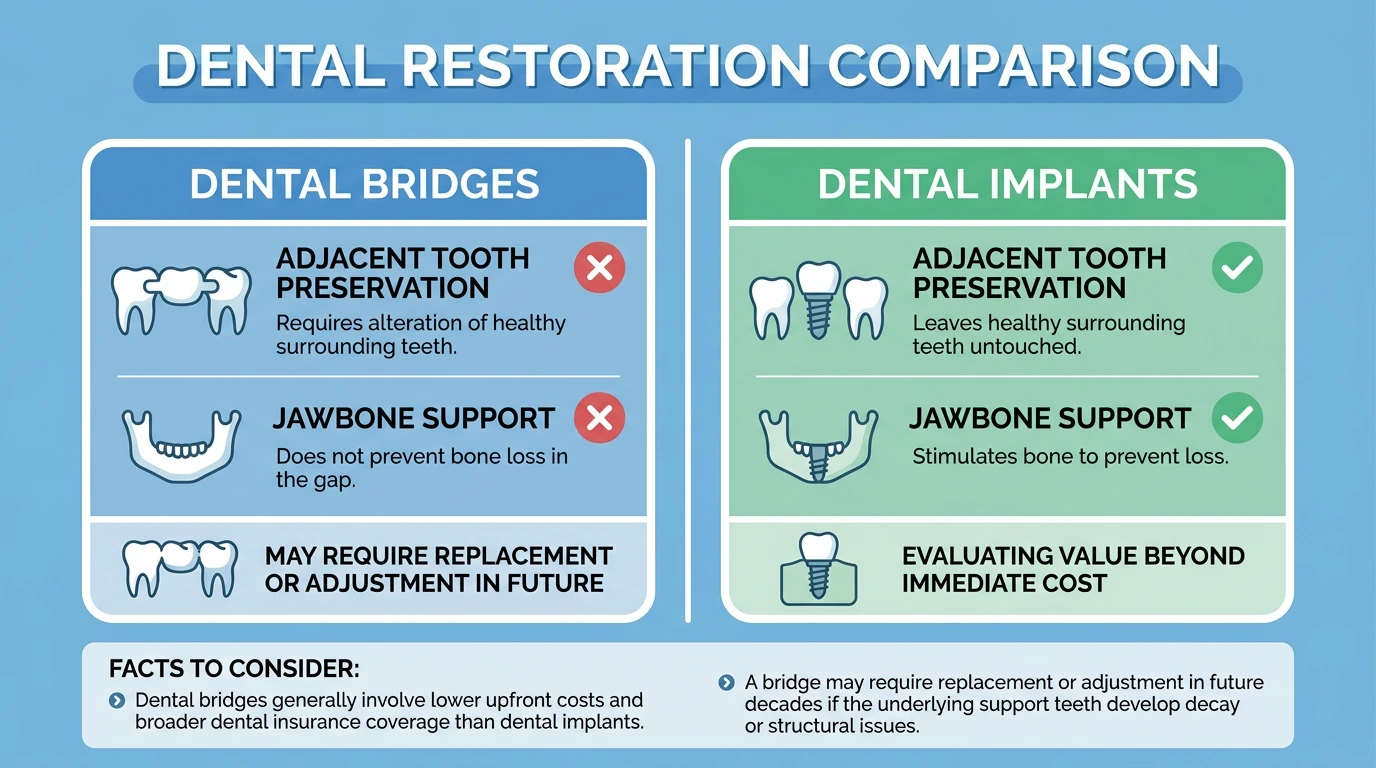
Dental bridges generally involve lower upfront costs and broader dental insurance coverage than dental implants. However, implants often deliver greater long-term value because they do not compromise adjacent teeth and can provide dependable service with proper home hygiene and routine cleanings.

Evaluating treatment value involves looking beyond the immediate price tag of your dental care. Financial factors include the number of teeth being replaced, the health of neighboring teeth, whether supplemental procedures like extractions or bone grafting are needed, and your individual insurance policy benefits.

A bridge may require replacement or adjustment in future years if the underlying support teeth develop decay or structural issues. Implants, while requiring a higher initial financial commitment, represent a long-lasting investment that maintains your jaw structure. Our administrative team works closely with patients to review insurance coverage and explain flexible payment options.

An infographic titled Dental Restoration Comparison contrasts dental bridges and dental implants across factors like adjacent tooth preservation and jawbone support with descriptive text and tooth diagrams.

When Does a Dental Bridge Make More Sense?

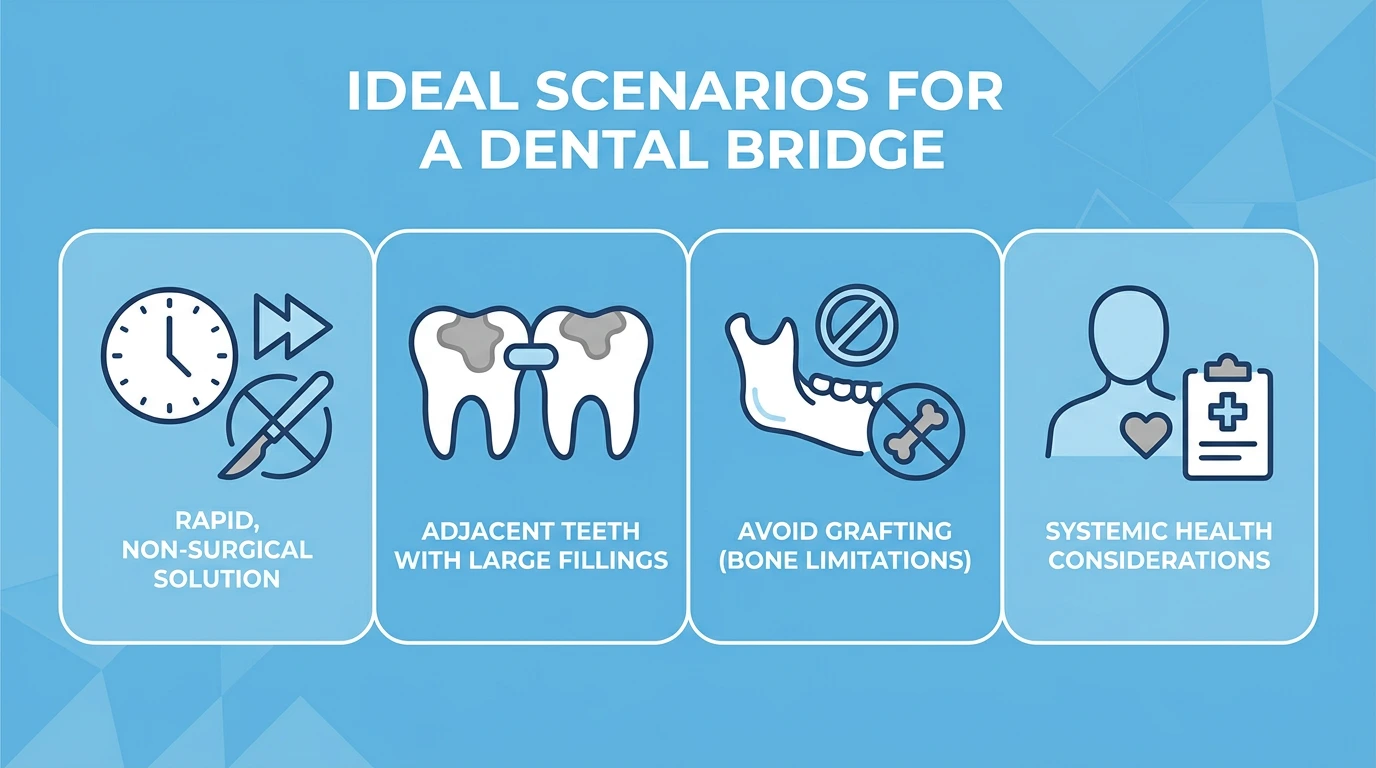
A dental bridge makes the most sense for patients seeking a fast, non-surgical solution, those with anatomical bone limitations who wish to avoid grafting, or individuals whose adjacent teeth already have large fillings or crowns that require replacement anyway.

For some individuals, systemic health considerations or medical conditions make oral surgery less advisable. In these scenarios, bridges deliver an attractive, functional bite without surgical healing phases.

Ideal Scenarios for a Bridge

  • Compromised adjacent teeth: If neighboring teeth already require crowns, connecting them with a bridge solves multiple issues at once.
  • Surgical hesitations: Patients who prefer to avoid surgery or have medical conditions that complicate bone healing.
  • Limited jawbone volume: Provides a stable restoration when bone density is insufficient for implant placement without grafting.
  • Shorter timelines: Ideal for individuals who want their complete smile restored within a matter of weeks.

Dr. Cory Fortson thoroughly reviews your medical history and dental records to determine if non-surgical bridges align best with your overall wellness.

Infographic detailing ideal scenarios for a dental bridge, showing icons for rapid non-surgical solutions, adjacent teeth with fillings, avoiding bone grafting, and systemic health considerations.

Choosing the Right Restoration in Lathrup Village

Deciding between bridges and implants is a personal choice that balances oral health, treatment duration, and long-term restorative goals. Neither option is universally superior; rather, each excels depending on your individual oral landscape and personal preferences.

If you have healthy neighboring teeth and adequate bone volume, an implant can protect your adjacent enamel and promote healthy jawbone preservation. Conversely, if your adjacent teeth already show signs of wear or decay, a bridge can reinforce those teeth while closing the gap quickly and effectively.

At Fortson Dentistry Lathrup, our team prioritizes comprehensive evaluations to help you make an informed decision. Dr. Cory Fortson takes the time to listen to your concerns, review diagnostic imaging, and construct a personalized treatment plan tailored to your lifestyle. Regaining a complete, functional smile restores chewing efficiency and protects your bite balance. We encourage you to schedule a consultation with our experienced team to discover which missing tooth solutions fit you best.

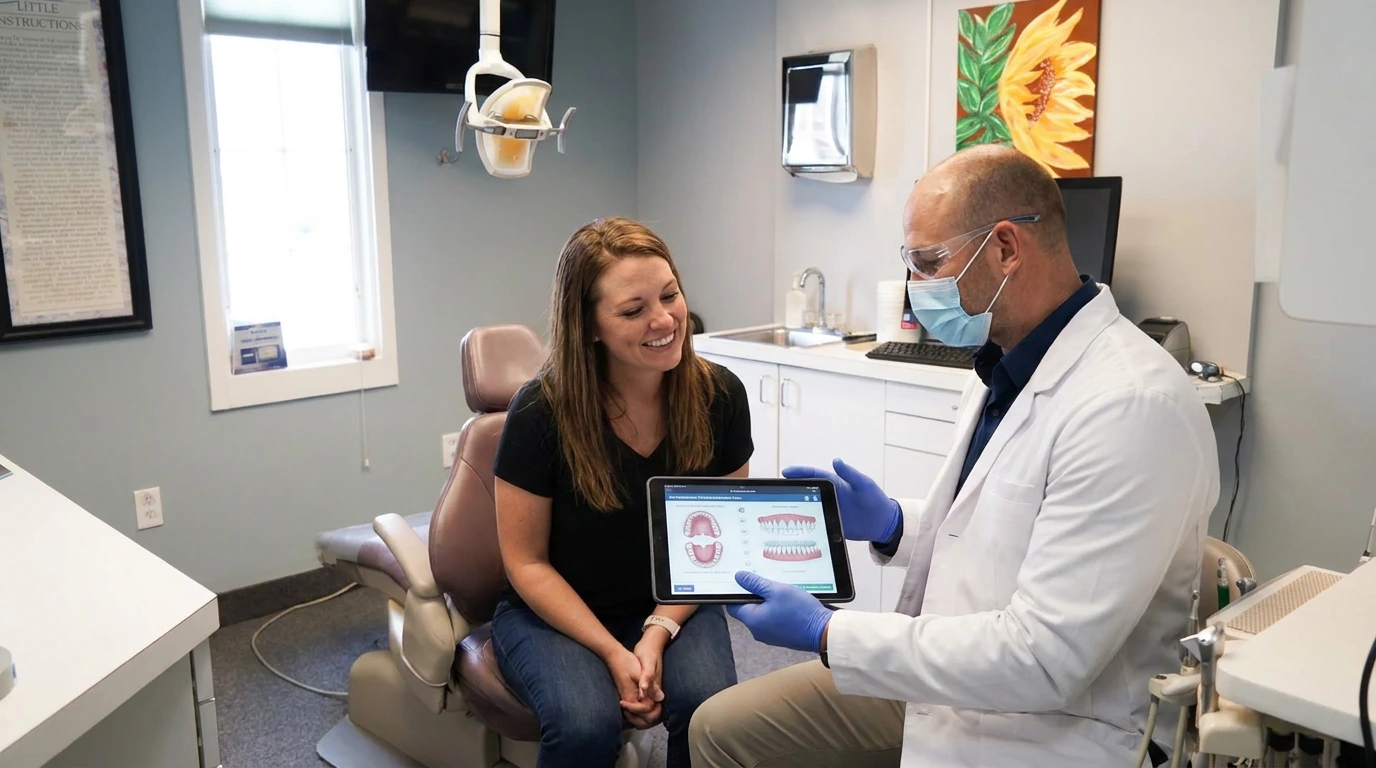
Dr. Fortson wears a mask and lab coat while holding a tablet displaying dental diagrams to show a smiling patient seated in an exam room chair.

Frequently Asked Questions

1. How long does a dental bridge typically last?
A dental bridge can provide long-lasting function for many years when supported by excellent daily oral hygiene and regular preventive dental checkups.

2. Is the dental implant procedure painful?
Implant placement is performed using local anesthesia to maintain patient comfort, with mild post-procedure soreness managed using recommended over-the-counter pain relievers.

3. Can an existing dental bridge be replaced with an implant?
Yes, an old bridge can often be replaced with an implant, provided there is adequate jawbone density or after completing bone grafting.

4. Do dental bridges look natural?
Modern bridges are crafted from tooth-colored ceramic materials that blend smoothly with your natural teeth in shade, shape, and translucency.

5. Can smokers get dental implants?
Smokers can receive implants, though smoking reduces blood flow to gum tissues, which may slow healing and increase the risk of implant complications.

6. Does dental insurance cover implants or bridges?
Most dental insurance policies provide standard coverage for bridges, while implant coverage varies widely based on specific plan benefits and individual policy terms.

7. How many missing teeth can a single bridge replace?
A conventional fixed bridge typically replaces one to three consecutive missing teeth, depending on the strength and location of the supporting anchor teeth.

8. Will food get stuck under a dental bridge?
Food particles can gather beneath the artificial tooth, making daily cleaning with floss threaders or interdental brushes essential for gum health.

9. How soon can I return to work after implant surgery?
Most patients return to normal daily activities within one to two days following an uncomplicated dental implant placement procedure.

10. Can Dr. Cory Fortson determine if I need a bone graft?
Dr. Cory Fortson uses modern diagnostic imaging during your initial exam to evaluate bone depth and determine if grafting is necessary before implant placement.

Latest Blog Posts

Stay Informed with Expert Insights & Tips About Dental Care

Dental Implants Restore Your Smile and Confidence

Dental implants provide a durable, natural-looking solution for missing teeth, restoring function and boosting confidence in daily life.

10.7.2026
READ MORE

How Long Do Dental Fillings Last

Understanding dental filling lifespans and factors affecting their durability helps patients make informed decisions about restorative dental care.

9.9.2026
READ MORE

Why Athletes Need Custom Sports Mouth Guards

Custom sports mouth guards provide superior protection for athletes of all ages, safeguarding against dental injuries, jaw trauma, and enhancing performance.

8.5.2026
READ MORE

BOOK AN APPOINTMENT

New Patient Specials
- $150 -
New Patient Exam, X-rays

New patients only. The cost of a New Patient Appointment will be $150. Cannot be combined with any other offer or insurance. Limited time offer. Call (248) 557-8120 for details.

Thank you for booking your appointment!

We’ve received your request and will contact you soon to confirm the details. We look forward to seeing you at Fortson Dentistry South Lathrup.

Oops! Something went wrong while submitting the form.